
Discussion - Member to Member Sales - Research Center
Discussion - Member to Member Sales - Research Center

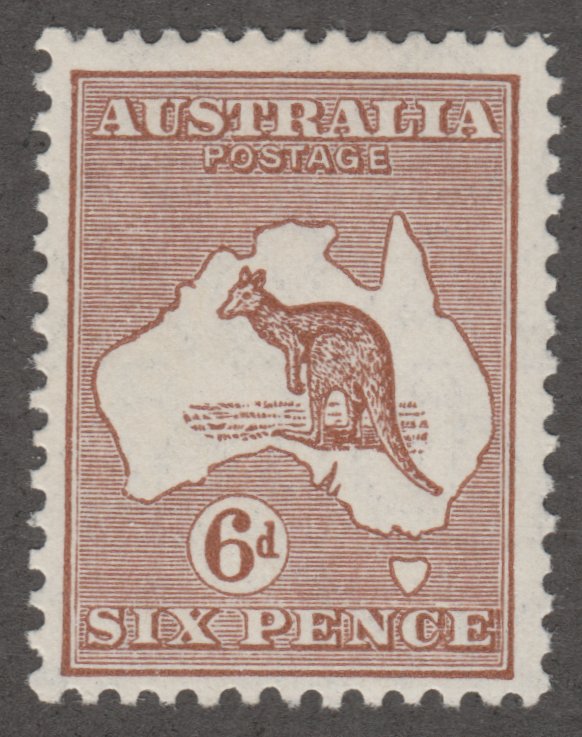
I think I've kinda figured out how to do this on StampWorld. If I check a stamp image size in pixels, multiply that by .02 I'll get the size in CM. This works for singles but not large multi-stamp or commemorative blocks.
I've also attempted to figure out how to tell from an image by counting perforations and dividing by the perf count... um, I need to expand and use words and variables...

L = the Length of the stamp you want to find
C = the Count of perforations on one side of the stamp you're trying to get the length of
P = the "Perf Count" as identified by whatever catalog or source that tells you about the stamp (i.e. 10, 11, 14.25, etc.) which is the count of specifically spaced perforations in 2cm.
L = ( C x 2 ) / P or L = C / ( P / 2 )
so, if I count 30 perforations on the long side of a stamp image, and the stamp definition says the stamp has a 14 1/4 perf count, then the approximate length of that side of the stamp would be:
(30 x 2cm ) / 14.25 = 60 / 14.25 cm = 4.21cm
or
30 / ( 14.25 / 2cm ) = 30 / 7.125 cm = 4.21cm
(whichever is easier)
˜˜JC

Login to Like
this post
think I just answered my own question: colnect.com
Login to Like
this post

04:31:00pm
I asked Grok the following question:
"Presume an image of a stamp with perforations. How would one go about writing software to count the number of perforations along each side of the stamp? And what language would be most appropriate for a desktop application?
For some background, the purpose of the application is to calculate the physical size of the stamp (useful for designing the printed boxes on pages of self-printed stamp albums when the stamp is not at hand and only an online image is available).
The perforation gauge of the stamp would be known from a catalog listing. This is standardized to the number of perforations in a 2cm length. Given the number of holes counted and the perforation gauge measurement, the physical size of the stamp can be calculated."
I no longer have the time for projects like this, however interesting they may be. So, for anyone that might like to take up the challenge and create either a desktop or a phone app to do this job, here is a link to Grok's response:
Let’s break this down step-by-step to design a solution for counting perforations on a stamp image and calculating its physical size. I’ll then recommend a suitable programming language for a desktop application.
Click for full response by Grok
Roy
1 Member
likes this post.
Login to Like.
Thanks Roy, and Grok, I think I understand the process, but am totally lost (or perhaps brain dead) with the program description. Presumably you would only have to input the size of two sides perforations, corners, and any straight edges not perforated, providing the shape is rectangular.
Must admit when designing pages I usually find the measurements on the net, or by actually measuring the physical stamp, plus backing paper where applicable.
It would be a really good idea for the major catalogues to include the stamp dimensions, along with the soakability factor. Then all the information needed is in one place.
Seem to recall that AI once meant artificial insemination, now artificial intelligence and I feel like an artificial idiot. I can also see why I never became a computer programmer, had enough trouble with my ZX81 and "Basic".
Login to Like
this post
05:48:59pm
The proposed program requires only 2 inputs:
1) the image
2) the perforation gauge as quoted in the catalog (i.e. 11 x 10)
I suppose you could say that's actually 3 inputs if you wanted to be picky.
Grok will even write and debug the code for you. The supplied code is "pseudo-code", actually just an algorithm written in code-like language that doesn't worry about the niceties of syntax. But it is fully capable of turning out completed code -- sometimes on the first try. Sometimes it takes a few iterations as problems are found or improvements in usability are requested.
For example, it just occurred to me that Scott only quotes perf gauges to the nearest half (i.e. 11.75 is actually reported as either 11.5 or 12.) That will cause some variability in the size output and may need to be allowed for.
Roy
Login to Like
this post
Roy, thanks for the explanation, but reckon I'm going to pass on this one and keep using a ruler or the web.
I see from news articles that the supercomputers are now cutting time spans on new medicines and that with the quantum chips coming through maybe it will be possible for new energy sources to be found. Maybe my grandchildren will see The Enterprise actually come to be, although I reckon Captain Kirk will have hung up his boots by then.
1 Member
likes this post.
Login to Like.
Some amazing stuff here, I'm going to have to deep-dive on it. Thanks to all for the input!
The reason I'm not just measuring the stamp is because I don't have them... trying to create stamp albums for stamps I don't yet have but plan/hope to.
1 Member
likes this post.
Login to Like.
The thought occurs that maybe the illustrations in the catalogues are of a certain reduced size, ie a % of original and if we knew what percentage we could calculate the original stamp size from measuring the illustration.
Anybody tried correlating the image size to stamp size to see if it is a standard reduction?
Login to Like
this post
All of which goes to help prove that we all collect the way we want to collect, as it should be. If we all collected the exact same way how boring would our hobby be? Also, what would the prices on our needed stamp be?
Mike
Login to Like
this post
Ok, have just checked four USA stamps, Sc. 1010; 1042; 2642; 2700. The catalogue illustrations appear to be approximately 35% of actual stamp size. Variation is possibly because of inaccurate measurement plus sometimes wider perfs/selvedge.
This could give you an approximate size for page design if you do not have the physical stamp.
Not all measurements are given on Colnect, but the round figures like 40mm do come out at 28mm, exactly 35%.
Login to Like
this post
05:06:06pm
@sheepshanks
I'm afraid the theory doesn't hold. Where necessary, Scott reduces larger images to fit the column width. Take a look at the $10 whale Canada #2405
There are too many different reductions to be able to use this method reliably.
Roy
Login to Like
this post
@Roy, quite true, which is why I usually look up the size on the web if I do not have a stamp to hand.
The $10 Whale stamp only just fits across a Steiner style page and I hate to mount stamps sideways, makes viewing awkward.
Login to Like
this post
Another option for obtaining stamp sizes is to use the Steiner pages as a source. The frames on the Steiner pages are usually 4mm larger than the stamp size. I have extracted the frame sizes from the Steiner pages and can provide them upon request. You would, of course, need to correlate the frames to the specific stamp based on position on the page (row number and left to right position). This is usually not too difficult since the stamps are arranged in Scott order.
Login to Like
this post

Does anyone know of other stamp databases out there with physical dimensions?
I think I've kinda figured out how to do this on StampWorld. If I check a stamp image size in pixels, multiply that by .02 I'll get the size in CM. This works for singles but not large multi-stamp or commemorative blocks.
I've also attempted to figure out how to tell from an image by counting perforations and dividing by the perf count... um, I need to expand and use words and variables...
L = the Length of the stamp you want to find
C = the Count of perforations on one side of the stamp you're trying to get the length of
P = the "Perf Count" as identified by whatever catalog or source that tells you about the stamp (i.e. 10, 11, 14.25, etc.) which is the count of specifically spaced perforations in 2cm.
L = ( C x 2 ) / P or L = C / ( P / 2 )
so, if I count 30 perforations on the long side of a stamp image, and the stamp definition says the stamp has a 14 1/4 perf count, then the approximate length of that side of the stamp would be:
(30 x 2cm ) / 14.25 = 60 / 14.25 cm = 4.21cm
or
30 / ( 14.25 / 2cm ) = 30 / 7.125 cm = 4.21cm
(whichever is easier)
˜˜JC
Login to Like
this post
re: Database With Physical Stamp Size?
think I just answered my own question: colnect.com
Login to Like
this post
BuckaCover.com - 80,000 covers priced 60c to $1.50 - Easy browsing 500 categories
04 Mar 2025
04:31:00pm
re: Database With Physical Stamp Size?
I asked Grok the following question:
"Presume an image of a stamp with perforations. How would one go about writing software to count the number of perforations along each side of the stamp? And what language would be most appropriate for a desktop application?
For some background, the purpose of the application is to calculate the physical size of the stamp (useful for designing the printed boxes on pages of self-printed stamp albums when the stamp is not at hand and only an online image is available).
The perforation gauge of the stamp would be known from a catalog listing. This is standardized to the number of perforations in a 2cm length. Given the number of holes counted and the perforation gauge measurement, the physical size of the stamp can be calculated."
I no longer have the time for projects like this, however interesting they may be. So, for anyone that might like to take up the challenge and create either a desktop or a phone app to do this job, here is a link to Grok's response:
Let’s break this down step-by-step to design a solution for counting perforations on a stamp image and calculating its physical size. I’ll then recommend a suitable programming language for a desktop application.
Click for full response by Grok
Roy
1 Member
likes this post.
Login to Like.

re: Database With Physical Stamp Size?
Thanks Roy, and Grok, I think I understand the process, but am totally lost (or perhaps brain dead) with the program description. Presumably you would only have to input the size of two sides perforations, corners, and any straight edges not perforated, providing the shape is rectangular.
Must admit when designing pages I usually find the measurements on the net, or by actually measuring the physical stamp, plus backing paper where applicable.
It would be a really good idea for the major catalogues to include the stamp dimensions, along with the soakability factor. Then all the information needed is in one place.
Seem to recall that AI once meant artificial insemination, now artificial intelligence and I feel like an artificial idiot. I can also see why I never became a computer programmer, had enough trouble with my ZX81 and "Basic".
Login to Like
this post
BuckaCover.com - 80,000 covers priced 60c to $1.50 - Easy browsing 500 categories
04 Mar 2025
05:48:59pm
re: Database With Physical Stamp Size?
The proposed program requires only 2 inputs:
1) the image
2) the perforation gauge as quoted in the catalog (i.e. 11 x 10)
I suppose you could say that's actually 3 inputs if you wanted to be picky.
Grok will even write and debug the code for you. The supplied code is "pseudo-code", actually just an algorithm written in code-like language that doesn't worry about the niceties of syntax. But it is fully capable of turning out completed code -- sometimes on the first try. Sometimes it takes a few iterations as problems are found or improvements in usability are requested.
For example, it just occurred to me that Scott only quotes perf gauges to the nearest half (i.e. 11.75 is actually reported as either 11.5 or 12.) That will cause some variability in the size output and may need to be allowed for.
Roy
Login to Like
this post
re: Database With Physical Stamp Size?
Roy, thanks for the explanation, but reckon I'm going to pass on this one and keep using a ruler or the web.
I see from news articles that the supercomputers are now cutting time spans on new medicines and that with the quantum chips coming through maybe it will be possible for new energy sources to be found. Maybe my grandchildren will see The Enterprise actually come to be, although I reckon Captain Kirk will have hung up his boots by then.
1 Member
likes this post.
Login to Like.
re: Database With Physical Stamp Size?
Some amazing stuff here, I'm going to have to deep-dive on it. Thanks to all for the input!
The reason I'm not just measuring the stamp is because I don't have them... trying to create stamp albums for stamps I don't yet have but plan/hope to.
1 Member
likes this post.
Login to Like.
re: Database With Physical Stamp Size?
The thought occurs that maybe the illustrations in the catalogues are of a certain reduced size, ie a % of original and if we knew what percentage we could calculate the original stamp size from measuring the illustration.
Anybody tried correlating the image size to stamp size to see if it is a standard reduction?
Login to Like
this post

re: Database With Physical Stamp Size?
All of which goes to help prove that we all collect the way we want to collect, as it should be. If we all collected the exact same way how boring would our hobby be? Also, what would the prices on our needed stamp be?
Mike
Login to Like
this post
re: Database With Physical Stamp Size?
Ok, have just checked four USA stamps, Sc. 1010; 1042; 2642; 2700. The catalogue illustrations appear to be approximately 35% of actual stamp size. Variation is possibly because of inaccurate measurement plus sometimes wider perfs/selvedge.
This could give you an approximate size for page design if you do not have the physical stamp.
Not all measurements are given on Colnect, but the round figures like 40mm do come out at 28mm, exactly 35%.
Login to Like
this post
BuckaCover.com - 80,000 covers priced 60c to $1.50 - Easy browsing 500 categories
05 Mar 2025
05:06:06pm
re: Database With Physical Stamp Size?
@sheepshanks
I'm afraid the theory doesn't hold. Where necessary, Scott reduces larger images to fit the column width. Take a look at the $10 whale Canada #2405
There are too many different reductions to be able to use this method reliably.
Roy
Login to Like
this post
re: Database With Physical Stamp Size?
@Roy, quite true, which is why I usually look up the size on the web if I do not have a stamp to hand.
The $10 Whale stamp only just fits across a Steiner style page and I hate to mount stamps sideways, makes viewing awkward.
Login to Like
this post

re: Database With Physical Stamp Size?
Another option for obtaining stamp sizes is to use the Steiner pages as a source. The frames on the Steiner pages are usually 4mm larger than the stamp size. I have extracted the frame sizes from the Steiner pages and can provide them upon request. You would, of course, need to correlate the frames to the specific stamp based on position on the page (row number and left to right position). This is usually not too difficult since the stamps are arranged in Scott order.
Login to Like
this post